

Quick Answer
As fall sports begin, young athletes are eager to get back on the field, court, or track. Taking a few simple precautions before the season starts—including conditioning, stretching, proper equipment, and early treatment of pain—can significantly reduce the risk of injury and help athletes enjoy a healthy, successful season.
For many families, August is an exciting time of year.
School is about to begin, practice schedules are filling up, and young athletes are preparing for football, soccer, cross country, volleyball, cheerleading, field hockey, and other fall sports.
The excitement of a new season is contagious.
Unfortunately, it’s also one of the busiest times of year for sports injuries.
At Suburban Orthopaedic Medical Center, we’ve cared for athletes of all ages throughout Newark and the surrounding New Jersey communities. One thing we’ve learned is that many sports injuries are preventable with the right preparation.
Whether your child is playing their first organized sport or returning for another competitive season, taking a few simple steps now can help keep them healthy and performing at their best.
Why Do So Many Sports Injuries Happen at the Beginning of the Season?
Many young athletes jump back into practices after a summer of lighter activity.
Even active children may not be ready for the sudden increase in running, jumping, sprinting, and repetitive movement. Without proper conditioning, muscles fatigue more quickly, coordination decreases, and the risk of injury increases.
The first few weeks of practice are especially important because the body is adapting to new physical demands.
Preparing before the season starts helps reduce that risk.
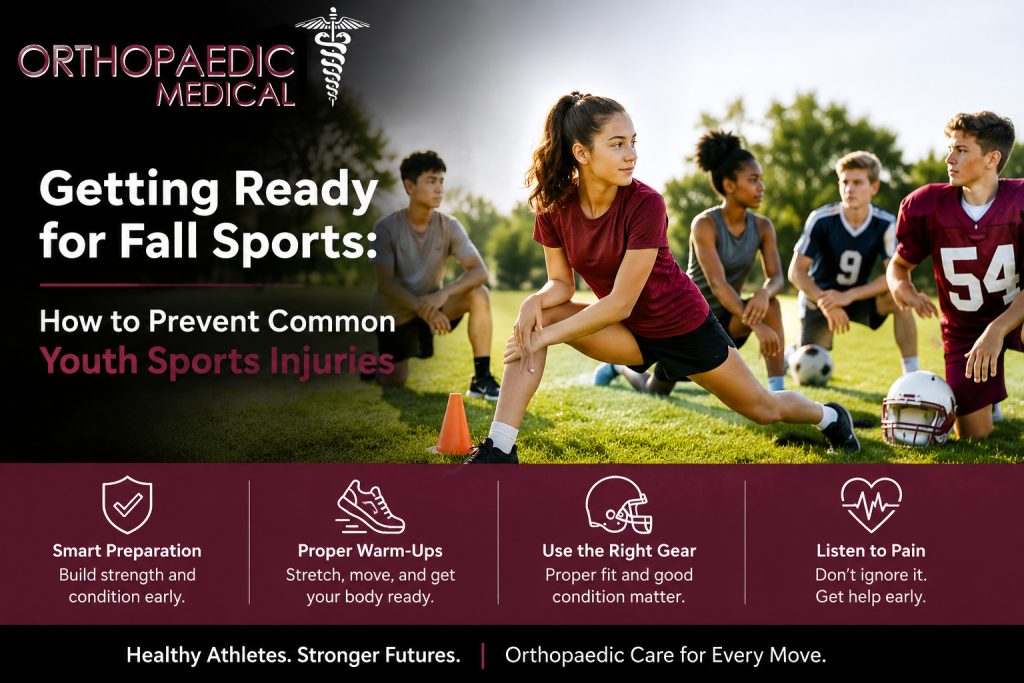
1. Build Strength Before Practice Begins
Conditioning shouldn’t begin on the first day of practice.
Gradually increasing activity several weeks beforehand allows muscles, joints, and ligaments to adjust.
Simple activities include:
- Walking or jogging
- Bodyweight exercises
- Stretching routines
- Balance exercises
- Core strengthening
- Sport-specific drills
A gradual approach builds endurance while reducing unnecessary stress on growing bodies.
2. Never Skip the Warmup
One of the easiest ways to help prevent injuries is also one of the most overlooked.
A proper warmup prepares muscles for activity and improves flexibility.
Instead of immediately beginning intense drills, athletes should spend several minutes:
- Walking or light jogging
- Dynamic stretching
- Gentle movement exercises
- Sport-specific warm-up drills
After practices and games, cooling down with light stretching can also improve recovery.
3. Wear the Right Equipment
Properly fitted equipment is essential.
Helmets, pads, cleats, braces, mouthguards, and supportive footwear all play important roles in injury prevention.
Equipment that’s too large, too small, or worn out may not provide adequate protection.
Parents should inspect equipment before each season and replace items that no longer fit or have become damaged.
4. Listen to Pain
Young athletes often don’t want to miss practice.
Many try to “play through the pain.”
Unfortunately, ignoring pain can turn a small injury into a much more serious one.
Pain that continues during activity, swelling, limited movement, or difficulty bearing weight should never be ignored.
Early evaluation often allows treatment to begin before the condition worsens.
Common Fall Sports Injuries
Every sport presents unique challenges, but some injuries appear more frequently than others.
These include:
- Sprains
- Strains
- Fractures
- Knee injuries
- Shoulder injuries
- Ankle injuries
- Wrist injuries
- Overuse injuries
- Concussions
Prompt evaluation helps determine the extent of an injury and the safest path back to sports.
5. Rest Is Part of Training
Today’s young athletes often play multiple sports throughout the year.
While staying active is beneficial, the body also needs time to recover.
Adequate sleep, hydration, proper nutrition, and scheduled rest days all contribute to injury prevention.
Recovery isn’t taking time off.
It’s an important part of improving athletic performance.
6. Know When to See an Orthopaedic Specialist
Not every sore muscle requires medical attention.
However, some symptoms shouldn’t wait.
Consider scheduling an evaluation when your child experiences:
- Persistent pain
- Swelling that doesn’t improve
- Joint instability
- Limited range of motion
- Difficulty walking
- Pain that returns every practice
- Injuries that aren’t improving with rest
Getting answers early often means returning to sports sooner—and more safely.
A Simple Injury Prevention Checklist
Before the season begins, ask these questions:
- Has my child gradually increased activity?
- Are they stretching before practices?
- Does all equipment fit properly?
- Are they drinking enough water?
- Are they getting enough sleep?
- Have they mentioned any lingering pain?
- Do they know it’s okay to speak up about injuries?
A few minutes of preparation today can help prevent weeks or months of recovery later.
Why Families Trust Suburban Orthopaedic Medical Center
When an injury happens, families want experienced care they can trust.
At Suburban Orthopaedic Medical Center, we’re committed to helping patients recover safely and return to the activities they enjoy.
Our physicians evaluate and treat a wide range of orthopedic conditions, including sports injuries, fractures, joint pain, ligament injuries, tendon problems, and musculoskeletal conditions for children, teens, and adults.
We believe every patient deserves compassionate care, clear communication, and treatment plans designed around their individual needs.
We’re proud to serve families throughout Newark and the surrounding New Jersey communities.
Help Your Athlete Enjoy a Healthy Season
Fall sports should be filled with teamwork, confidence, and memorable moments—not preventable injuries.
Preparing before the season begins gives young athletes the best opportunity to stay healthy and perform at their highest level.
Should an injury occur, early evaluation and expert orthopedic care can make all the difference.
The team at Suburban Orthopaedic Medical Center is here to help athletes of all ages recover safely and return to the sports they love.
Call (973) 483-2277
Frequently Asked Questions
What are the most common youth sports injuries?
Sprains, strains, fractures, knee injuries, ankle injuries, shoulder injuries, and overuse injuries are among the most common orthopedic conditions seen during youth sports seasons.
How can my child reduce the risk of sports injuries?
Proper conditioning, stretching, strength training, hydration, adequate sleep, and wearing correctly fitted equipment all help reduce injury risk.
Should my child play through pain?
No. Persistent pain should never be ignored. Continuing to play while injured can lead to more serious problems and longer recovery times.
When should I take my child to an orthopedic specialist?
Seek evaluation if pain continues, swelling develops, movement becomes limited, or your child cannot safely return to normal activities.
Can overuse injuries be prevented?
Yes. Rest days, limiting repetitive movements, proper training, and avoiding year-round overuse of the same muscles and joints all help reduce risk.
What areas does Suburban Orthopaedic Medical Center serve?
We proudly provide orthopedic care for patients in Newark, New Jersey, and the surrounding communities.
Ready to Keep Your Athlete Healthy This Season?
Every athlete deserves the opportunity to compete safely and confidently.
Whether your child is preparing for the first practice of the season or recovering from an injury, Suburban Orthopaedic Medical Center is here to provide experienced orthopedic care every step of the way.
We’re committed to helping athletes return to doing what they love—stronger, healthier, and ready for the season ahead.