

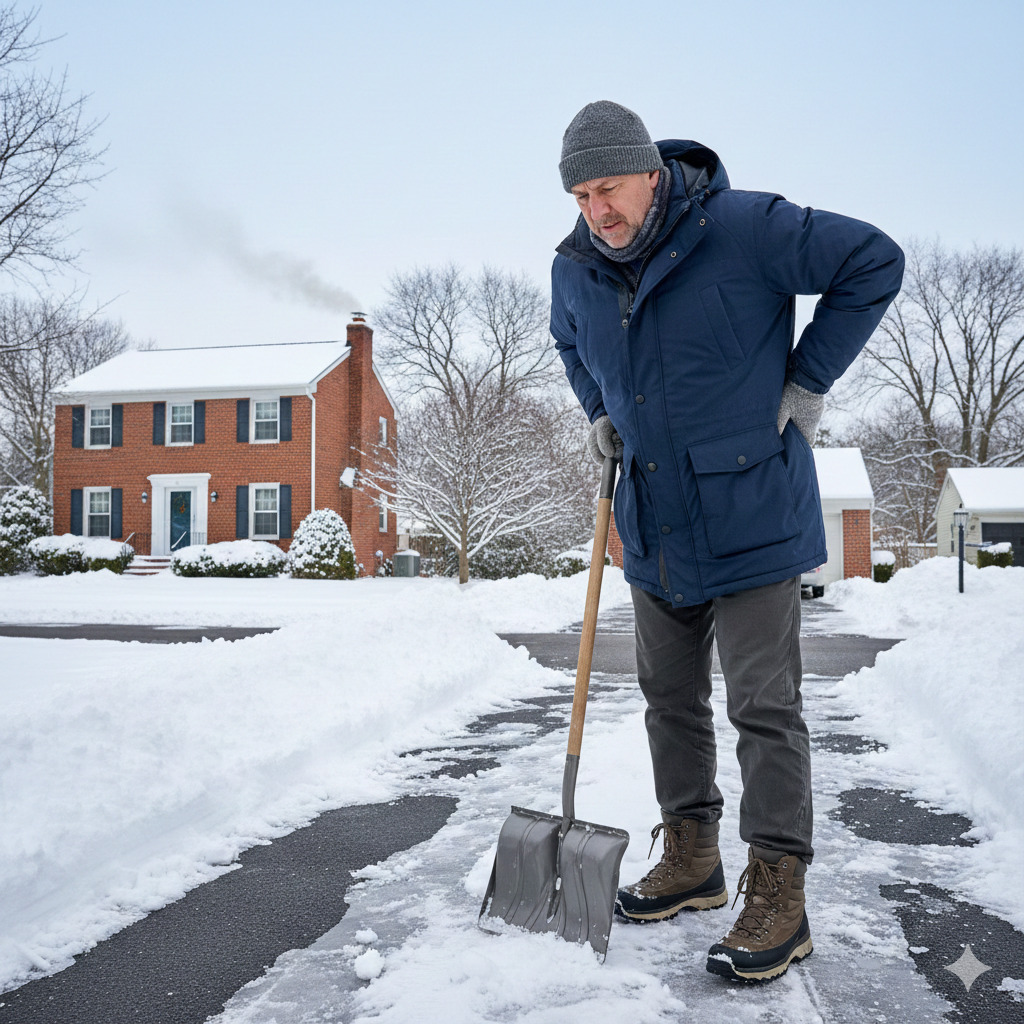
Did you feel that twinge in your back or knee after shoveling your driveway during these big January and February snowstorms? Or maybe you slipped on black ice walking to your car this morning?
Every February, orthopedic doctors in New Jersey see a surge in injuries caused by snow shoveling, slips on ice, and winter strain. Knee, shoulder, hip, and back pain often start as minor discomfort but can turn into long-term joint problems without early care. Prompt evaluation protects mobility, reduces recovery time, and prevents ongoing pain.
Why February Is the Breaking Point for Winter Injuries
February is when winter stops being occasional and starts being cumulative. After weeks of snow, ice, freezing temperatures, and rushed routines, your body has endured repeated strain. Driveways have been shoveled multiple times. Sidewalks and parking lots remain unpredictable. Muscles stay tight. Joints don’t warm up like they do in spring or summer.
Homeowners twist and lift heavy, wet snow. Commuters hurry across icy surfaces. Active older adults push through stiffness, assuming aches are “just part of winter.”
From an orthopedic perspective, February is when small issues often become serious. At Suburban Orthopaedic Medical Center, this month consistently brings a noticeable increase in snow shoveling injuries, winter slip and fall injuries, and joint pain that no longer resolves on its own.
How Winter Strain Affects Your Joints
Cold weather changes how your body moves. Muscles are less flexible. Balance reactions slow. Reaction time dips. Add heavy lifting or a sudden slip, and joints absorb forces they aren’t ready for.
- One awkward twist while shoveling can strain your shoulder or back.
- A brief slip on ice can transmit impact through your knees or hips.
- Even repetitive strain without a fall can inflame joints already managing arthritis or prior injuries.
Delaying care is the bigger risk. Many wait weeks hoping pain will fade. By spring, that “minor” injury may involve tendon damage, joint instability, or nerve irritation, making treatment longer and recovery slower.
The Most Common Winter Injuries Orthopedists See in February
While some seasonal stiffness is common, persistent discomfort in your joints often signals underlying inflammation or injury that requires professional attention.
| Injury Area | Common Winter Cause | When to See an Orthopedist | Quick Tip |
| Shoulder | Snow shoveling, lifting | Pain > a few days or limits movement | Scoop smaller amounts of snow, lift with legs, not back |
| Knee | Slips or twists on ice | Swelling, instability, or pain while walking | Wear shoes with traction; avoid sudden twists |
| Hip | Falls on icy surfaces | Pain when standing or bearing weight | Use handrails; keep pathways clear of ice |
| Back | Lifting snow, sudden strain | Ongoing pain or radiating symptoms | Warm up muscles; lift in small increments |
Expert Advice from Suburban Orthopaedic Medical Center
“February is when we see the long-term consequences of pushing through winter pain,” says Franco Rizzolo, owner. “What feels manageable today can quietly turn into a serious mobility issue by spring. Early evaluation prevents lasting joint damage and helps people return to normal activity much sooner.”
This practical, preventative approach is at the heart of orthopedic care in New Jersey during winter’s peak.
When to See an Orthopedist
Winter injuries don’t always announce themselves loudly. Schedule an evaluation if you notice:
- Pain that persists beyond a few days
- Stiffness or limited movement
- Swelling or discomfort while walking, lifting, or climbing stairs
- Daily activities becoming uncomfortable
Early assessment often means simpler treatment, better outcomes, and less disruption to your routine.
FAQs
Is joint pain after winter normal?
Some stiffness is common, but ongoing pain is not. Persistent discomfort may signal injury or inflammation.
Can snow shoveling really cause serious injuries?
Yes. Improper lifting and repetitive strain commonly injure shoulders, knees, and backs.
Should I wait until spring to see a doctor?
No. Waiting often worsens injuries and lengthens recovery. Early care usually leads to faster, simpler treatment.
Do slip and fall injuries always hurt right away?
Not always. Symptoms may appear days later as inflammation develops.
Take Action Before Winter Injuries Follow You Into Spring
Winter injuries don’t heal on a calendar—they heal with attention. Don’t wait for spring to discover a lingering problem. If you’re experiencing knee, shoulder, hip, or back pain after snow, ice, or shoveling, schedule an orthopedic consultation now. Protect your mobility, reduce pain, and make sure you move comfortably into spring.
Schedule your evaluation with Suburban Orthopaedic Medical Center today and take control of your winter joint health.